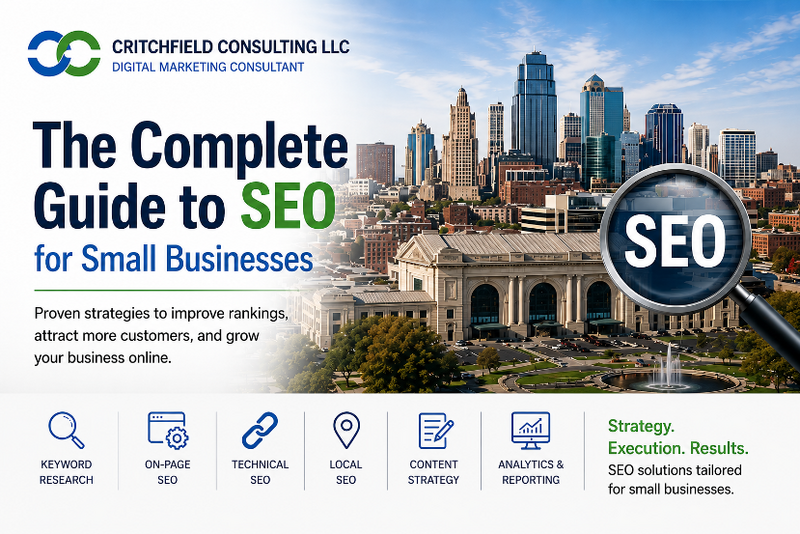
Everything You Need to Know to Rank Higher, Generate More Leads, and Win in Google & AI Search
If you've ever wondered why one business consistently appears at the top of Google while another struggles to be found, you're asking the right question.
Search Engine Optimization (SEO) has become one of the most valuable long-term investments a small business can make. Whether you're trying to generate more leads, increase website traffic, improve local visibility, or compete in AI-powered search, SEO plays a critical role in how customers discover your business online.
Unfortunately, SEO is also one of the most misunderstood aspects of digital marketing.
Some businesses believe it's simply adding keywords to a website. Others assume it's buying backlinks or publishing a few blog articles each month. While those tactics can contribute to an SEO strategy, they represent only a small piece of a much larger puzzle.
Modern SEO is about creating a website that search engines understand, users trust, and potential customers genuinely find valuable.
At Critchfield Consulting, we've spent more than 15 years helping businesses strengthen their online presence through strategy-led website design, structured content development, technical optimization, local SEO, and digital marketing consulting. Throughout more than 300 website and marketing projects, one thing has remained consistent:
Businesses that approach SEO strategically almost always outperform those chasing quick fixes.
This guide was created to help business owners understand what SEO really means today, how search engines evaluate websites, and what practical steps you can take to improve your online visibility. Whether you're building a new website, improving an existing one, or trying to understand why your competitors continue to outrank you, this guide will provide the foundation you need to make smarter marketing decisions.
Along the way, we'll also explore how Google AI Overviews, ChatGPT, Gemini, and other AI-powered search platforms are changing the way businesses are discovered online—and why preparing for that future starts today.
If you're new to SEO, this guide will help you understand the fundamentals.
If you've invested in SEO before but haven't seen the results you expected, you'll likely discover why.
And if you're serious about growing your business online, you'll walk away with a much clearer understanding of what separates websites that rank from those that don't.
Why SEO Matters More Than Ever
Not long ago, having a website was enough to establish an online presence.
Today, that's no longer the case.
Every day, potential customers search Google looking for products, services, and answers to their questions. They compare businesses, read reviews, explore websites, and often make purchasing decisions long before contacting a company directly.
SEO helps ensure your business appears when people are actively searching for the services you provide. Unlike paid advertising, which stops generating traffic the moment your budget runs out, organic search visibility can continue producing qualified leads month after month when built on a strong foundation.
But visibility alone isn't enough.
Today's search engines evaluate far more than keywords. They consider website structure, content quality, technical performance, user experience, authority, local relevance, and increasingly, how well your website answers questions for AI-powered search platforms.
That's why effective SEO isn't a standalone service.
It's closely connected to:
- Website strategy and design
- Technical website development
- Copywriting and content marketing
- Local SEO
- User experience
- Conversion optimization
- Analytics and performance tracking
Each of these disciplines supports the others, creating a stronger digital foundation that benefits both search engines and your customers.
Over the next several sections, we'll break down each of these components, explain why they matter, and show how they work together to help businesses compete in today's evolving search landscape.
Consultant's Insight
One of the biggest misconceptions we encounter is that SEO is something you "add" to a website after it's finished. In reality, the strongest-performing websites are designed with SEO in mind from the very beginning. Strategy, content, structure, user experience, and technical development all work together. When those elements are planned early, businesses typically see stronger long-term results with fewer costly revisions later.
What SEO Really Means in 2026
Search Engine Optimization has changed dramatically over the past two decades.
Years ago, many websites ranked well simply by repeating keywords, building large numbers of backlinks, or creating pages designed primarily for search engines instead of people. While those tactics may have produced short-term gains, today's search algorithms are far more sophisticated.
Modern SEO is no longer about manipulating search engines. It's about helping search engines understand that your business is the best answer for a customer's question.
Google's mission has always been to organize the world's information and deliver the most relevant, trustworthy, and helpful results for every search. Every major algorithm update has moved closer to that goal.
Today, successful SEO combines dozens of interconnected factors, including:
- Technical website performance
- Helpful, well-written content
- User experience
- Website organization and structure
- Local business signals
- Authority and trust
- Experience and expertise
- Mobile usability
- Structured data (Schema)
- AI search readiness
No single factor guarantees success.
Instead, Google evaluates hundreds of ranking signals to determine which websites deserve the most visibility.
SEO Is About Building Trust
Think of Google as making a recommendation.
When someone searches for a service, Google is essentially saying:
"We believe these businesses are the most qualified to answer your question."
That's why trust has become one of the most valuable currencies in SEO.
Google wants evidence that your business is legitimate, experienced, and capable of helping searchers.
That trust is built through many signals, including:
- Publishing helpful, original content
- Demonstrating industry expertise
- Earning positive customer reviews
- Maintaining an accurate Google Business Profile
- Creating a fast, secure website
- Keeping information current and relevant
- Building authority through quality backlinks and citations
The more confidence search engines have in your business, the more likely they are to recommend it.
Search Intent Matters More Than Keywords
One of the biggest shifts in modern SEO is Google's ability to understand search intent.
Search intent simply means the reason someone performs a search.
For example, someone searching:
"How does SEO work?"
is looking for education.
Someone searching:
"Kansas City SEO consultant"
is looking for a professional to hire.
Someone searching:
"Best website designer near me"
is likely comparing companies before making a purchasing decision.
Although those searches may contain similar keywords, they represent completely different goals.
Your content should answer the intent behind the search—not just repeat the words someone typed into Google.
That's one reason every important service deserves its own dedicated page supported by related blog content.
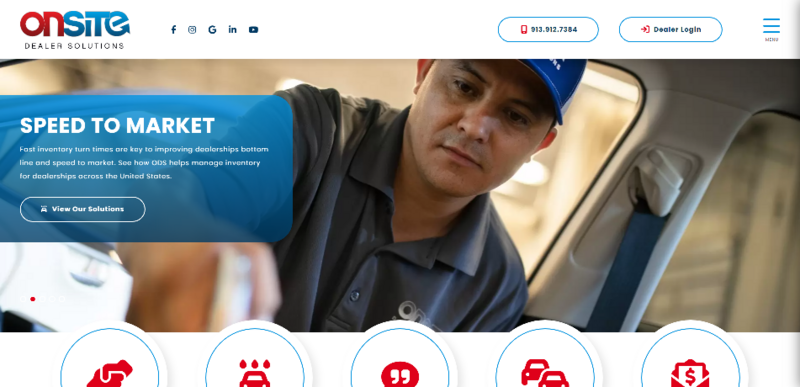
For a real-world example of these principles in action, see how Critchfield Consulting modernized OnSite Dealer Solutions for the next era of search, improving its post-upgrade digital scorecard from 7.9 to 9.3.
Google's E-E-A-T Framework
Although E-E-A-T isn't a direct ranking factor, it plays an important role in how Google evaluates content quality.
E-E-A-T stands for:
- Experience
- Expertise
- Authoritativeness
- Trustworthiness
Businesses demonstrate these qualities by consistently publishing accurate, helpful information backed by real-world experience.
For example, a contractor sharing project photos, a law firm explaining workers' compensation laws, or a marketing consultant documenting successful client projects all provide stronger trust signals than generic content written without firsthand knowledge.
That's one reason we encourage businesses to create:
- Educational blog articles
- Case studies
- Project portfolios
- Frequently Asked Questions
- Customer testimonials
- Original photography and video
Each of these elements helps reinforce credibility with both search engines and prospective customers.
SEO Is Becoming More Human
Ironically, as search technology becomes more advanced, successful SEO becomes more focused on people.
Google's algorithms continue evolving to better understand:
- Natural language
- User behavior
- Content quality
- Website usability
- Helpful answers
- Real expertise
Rather than asking,
"How do I rank for this keyword?"
Modern businesses should ask,
"How can I become the best resource for this topic?"
That subtle shift changes everything.
Businesses that genuinely educate, solve problems, and build trust tend to earn stronger rankings over time because they're creating the type of content search engines want to recommend.
Consultant's Insight
We often hear business owners ask, "What's the best keyword for my website?" In reality, that's usually the wrong question. A better question is, "What questions are my customers asking before they decide to hire someone?" When your website consistently answers those questions better than your competitors, you're building the kind of authority that supports long-term SEO success.
How Search Engines Actually Rank Websites
One of the biggest misconceptions about SEO is that Google ranks businesses.
It doesn't.
Google ranks the pages that it believes provide the best answer to a searcher's question.
That distinction is incredibly important.
If someone searches for "website design in Kansas City," Google isn't trying to decide which web design company is the biggest or has been in business the longest.
Instead, it's asking questions like:
- Which page best answers the user's search?
- Which business appears to have the most expertise?
- Which website is the easiest to use?
- Which content is the most helpful?
- Which company has earned the most trust?
Every search is essentially a competition between websites trying to prove they're the best answer.
Think Like Google
Imagine you ask ten friends for a recommendation for the best restaurant in town.
You're probably going to trust the restaurant that:
- Has consistently great reviews
- Has been recommended by multiple people
- Has an easy-to-read menu
- Has recent photos
- Looks clean and professional
- Has a reputation for delivering a great experience
Google evaluates websites in much the same way.
It's constantly gathering signals that help determine whether a business deserves to be recommended.
The more positive signals your website sends, the more confidence Google has in showing it to potential customers.
Google Evaluates Hundreds of Ranking Signals
Google has never published its complete ranking algorithm, and it's constantly evolving.
However, we do know that search engines consider hundreds of different signals when evaluating a website.
Some of the most important include:
- Content quality and relevance
- Search intent
- Website speed and performance
- Mobile usability
- Technical SEO
- Internal linking
- Website organization
- Backlink quality
- Business credibility
- Customer reviews
- Google Business Profile optimization
- Schema markup
- User engagement
- Experience, Expertise, Authoritativeness, and Trust (E-E-A-T)
No website is perfect in every category.
Instead, successful websites perform consistently well across many areas.
That's why effective SEO isn't about chasing one ranking factor. It's about strengthening your entire digital presence.
Relevance Always Comes First
Before Google considers authority, backlinks, or technical SEO, it asks a simple question:
"Is this page relevant to the search?"
For example, if someone searches for:
Commercial Roofing Contractor
Google isn't looking for a homepage that briefly mentions roofing.
It's looking for a page dedicated to commercial roofing that answers the searcher's questions in depth.
Likewise, if someone searches for SEO Services, they're expecting a page specifically about SEO, not a generic digital marketing page listing twenty different services.
This is why we recommend creating dedicated service pages for each major service your business offers, supported by educational blog articles and related resources that reinforce your expertise.
Authority Is Earned Over Time
Authority isn't something you buy.
It's something you build.
Google gains confidence in your website as it sees consistent evidence that your business is knowledgeable, trustworthy, and active within your industry.
Some of those trust signals include:
- Publishing educational content on a regular basis
- Earning quality backlinks from reputable websites
- Receiving positive customer reviews
- Maintaining an active Google Business Profile
- Showcasing completed projects and case studies
- Demonstrating real-world experience
- Keeping your website updated
Authority grows gradually.
Businesses that consistently invest in their websites typically see stronger long-term results than businesses looking for quick SEO wins.
User Experience Matters More Than Ever
Imagine finding exactly what you're looking for...
...but the website loads slowly.
The navigation is confusing.
Half the page doesn't work on your phone.
The contact form is broken.
Most visitors won't stay.
Neither will Google.
Search engines increasingly evaluate how users interact with websites because those interactions often indicate whether the page provided a positive experience.
Some important user experience and website navigation factors include:
- Fast loading speeds
- Mobile-friendly design
- Easy navigation
- Clear page structure
- Readable content
- Helpful images and video
- Strong calls to action
SEO isn't just about helping Google understand your website.
It's also about creating a better experience for the people visiting it.
The two go hand in hand.
SEO Is a System, Not a Checklist
Many businesses treat SEO like a list of tasks.
Add keywords.
Write a blog.
Build backlinks.
Update the homepage.
Unfortunately, SEO doesn't work that way. Every improvement supports another. Better content helps build authority. Better website structure improves crawlability. Faster page speeds improve user experience. Clear navigation strengthens internal linking. Helpful resources increase engagement. Positive customer experiences generate reviews.
When these pieces work together, the results become much stronger than any individual tactic could achieve on its own.
That's why we approach SEO as an ongoing strategy, not a one-time project.
Consultant's Insight
One of the most common issues we see during Digital Marketing Evaluations is businesses trying to make one page rank for everything. A homepage simply can't be the best answer for every service you offer. The businesses that consistently perform well in search typically create dedicated service pages, educational resources, case studies, and supporting content that demonstrate expertise across an entire subject, not just a single keyword.
Why Search Intent Is More Important Than Keywords
For years, SEO was largely centered around keywords.
Businesses wanted to know:
- What keywords should I rank for?
- How many times should I use them?
- Should I put them in every heading?
While keywords still matter, they're no longer the primary focus of modern SEO.
Today, search engines are much more interested in why someone is searching than the exact words they type into Google.
This is known as search intent, and understanding it is one of the biggest differences between websites that rank consistently and those that struggle to gain visibility.
What Is Search Intent?
Search intent is the purpose behind a search.
In other words, what is the person actually trying to accomplish?
Consider these searches:
- "What is SEO?"
- "SEO checklist for small businesses"
- "Kansas City SEO consultant"
- "Best SEO company near me"
Each search contains similar keywords, but each represents a completely different stage in the customer's journey.
Someone searching "What is SEO?" wants education.
Someone searching "SEO checklist for small businesses" is researching possible solutions.
Someone searching "Kansas City SEO consultant" is likely evaluating companies.
And someone searching "Best SEO company near me" may be ready to schedule a consultation.
Although the words are similar, the intent behind each search is very different.
Every Page Should Have a Purpose
One of the biggest SEO mistakes we see is businesses expecting a single page to rank for every service they offer.
For example, a homepage might mention:
- Website Design
- SEO
- Copywriting
- Photography
- Video Production
- Branding
- Marketing Consulting
Unfortunately, that's rarely enough.
Each of those services deserves its own dedicated page because each one answers a different question that potential customers are asking.
The same principle applies to blog content.
Every article should answer a specific question or solve a particular problem.
Instead of writing broad, generic content, focus on creating resources that address the exact concerns your customers have before they decide to contact you.
That's one of the reasons we continue building comprehensive service pages, educational blog articles, project case studies, and industry resources for our clients.
Together, they create a stronger foundation for both users and search engines.
Think Like Your Customers
Rather than asking,
"What keywords should I target?"
Try asking,
"What questions are my customers asking before they hire someone?"
For example, a roofing company might create content answering questions like:
- How much does a new roof cost?
- How long does a roof replacement take?
- Do I need roof repair or replacement?
- What roofing material is best for my home?
- Will insurance cover storm damage?
Each of those questions represents a real search that potential customers are making every day.
By answering those questions thoroughly, the roofing company positions itself as a trusted resource while increasing its opportunities to appear in search results.
The same strategy applies regardless of your industry.
Helpful Content Wins
Google's Helpful Content System continues rewarding websites that prioritize people over search engines.
That means your content should:
- Answer real customer questions
- Be easy to read and navigate
- Demonstrate firsthand knowledge and experience
- Provide practical, useful information
- Help visitors make informed decisions
Content written solely to rank for keywords often feels repetitive, generic, or incomplete.
Helpful content feels like advice from an experienced professional.
When you focus on educating your audience instead of chasing rankings, you're often improving your SEO at the same time.
Topic Clusters Build Authority
Search engines don't just evaluate individual pages.
They also evaluate how well your entire website covers a subject.
For example, an SEO website might include:
- An SEO services page
- A local SEO page
- A technical SEO page
- A content marketing page
- Blog articles about Google rankings
- Articles about AI search
- Website optimization guides
- Client case studies
Collectively, those pages tell Google,
"This business has extensive experience and knowledge in SEO."
This strategy is commonly called a topic cluster, and it's one of the most effective ways to build topical authority over time.
Rather than publishing unrelated articles, businesses should focus on creating content that supports their core services and demonstrates expertise within their industry.
Great SEO Starts with Great Questions
One of the simplest ways to improve your website is to listen more carefully to your customers.
Pay attention to the questions they ask during consultations, phone calls, emails, and sales meetings.
If one customer asks a question, chances are dozens, or even hundreds, of others are searching for that same answer online.
Every one of those questions represents an opportunity to create valuable content that attracts qualified visitors before they ever contact your business.
The businesses that consistently answer their customers' questions are often the businesses that earn greater trust, stronger search visibility, and more qualified leads.
Consultant's Insight
One exercise we recommend to every client is making a list of the twenty questions customers ask most often before hiring your business. Those questions become the foundation of your content strategy. Instead of guessing what to write about, you're creating resources that directly address what your audience is already searching for. It's one of the most practical and effective ways to improve both your SEO and your customer experience.
The Four Pillars of SEO
If SEO feels overwhelming, you're not alone.
There are countless articles discussing keywords, backlinks, page speed, metadata, content, schema, artificial intelligence, user experience, local search, and dozens of other ranking factors.
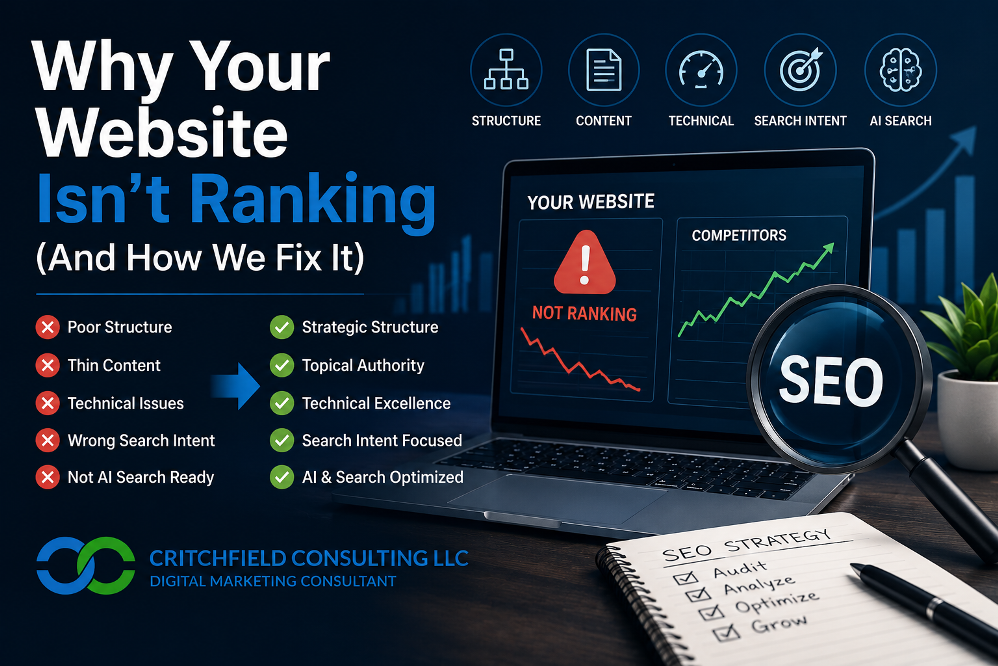
While all of those topics matter, they can generally be organized into four core pillars.
Think of these pillars as the foundation of every successful SEO strategy.
When one pillar is weak, it limits the effectiveness of the others. When all four work together, they create a website that search engines understand, users trust, and potential customers want to engage with.
Let's take a closer look at each one.
1. Technical SEO
Technical SEO is the foundation that supports everything else.
If your website has technical issues, even the best content may struggle to rank because search engines can't efficiently crawl, understand, or index your pages.
Technical SEO focuses on improving the health and performance of your website behind the scenes.
Common areas include:
- Website speed and Core Web Vitals
- Mobile responsiveness
- Secure HTTPS connections
- XML sitemaps
- Robots.txt configuration
- Schema markup
- Crawlability and indexing
- Canonical URLs
- Redirect management
- Broken links and error pages
Many of these improvements aren't visible to visitors, but they play an important role in helping search engines understand your website.
Think of Technical SEO as building a strong foundation before constructing a house. Without that foundation, everything else becomes less stable.
Related Page: Web Programming & Development Services
2. On-Page SEO
On-Page SEO focuses on optimizing the individual pages of your website.
This is where search engines learn what each page is about and how it relates to a user's search.
Strong On-Page SEO includes:
- Clear page titles
- Well-written meta descriptions
- Proper heading structure (H1, H2, H3)
- Helpful page copy
- Keyword relevance
- Internal linking
- Image optimization
- Descriptive URLs
- Logical page organization
But successful On-Page SEO goes far beyond simply placing keywords throughout a page.
Every page should answer a specific question, solve a particular problem, or help a visitor accomplish a goal.
The clearer that purpose becomes, the easier it is for both search engines and users to understand the value of your content.
Related Pages:
3. Content SEO
Content is where your expertise becomes visible.
It's also where many businesses either separate themselves from the competitionbl or end into it.
Every piece of content on your website should serve a purpose.
That includes:
- Service pages
- Blog articles
- Case studies
- FAQs
- Resource guides
- Industry insights
- Project portfolios
Each page should answer questions your customers are already asking while demonstrating your knowledge and experience.
Over time, this creates what Google refers to as topical authority.
Instead of having a handful of isolated pages, your website becomes a complete resource covering your industry from multiple perspectives.
This is why we encourage businesses to create content consistently rather than publishing a few articles and stopping.
Every new piece of helpful content strengthens the overall authority of your website.
Related Pages:
- Digital Excellence: Guide to Web Design
- Reaching Diverse Audiences with Responsive Website Design
- Common Website Design Mistakes That Hurt Business
4. Authority & Off-Page SEO
Not every ranking signal comes from your own website.
Google also evaluates how the rest of the internet views your business.
This is commonly known as Off-Page SEO.
Some of the strongest authority signals include:
- Quality backlinks
- Google Business Profile optimization
- Customer reviews
- Local business citations
- Brand mentions
- Industry partnerships
- Social proof
- Community involvement
These signals help reinforce that your business is legitimate, trusted, and active within its industry.
However, it's important to remember that authority isn't built overnight.
Like trust in the real world, it's earned gradually through consistent work and positive customer experiences.
Businesses that focus on delivering exceptional service often see their authority grow naturally as customers leave reviews, recommend them to others, and link to their content.
Related Pages:
Why All Four Pillars Matter
One of the biggest mistakes businesses make is focusing on only one area of SEO.
For example, they may publish blog articles while ignoring technical issues.
Or they invest in backlinks without improving the quality of their website.
Others redesign their website but never create new content afterward.
Unfortunately, SEO doesn't work that way.
These four pillars support one another.
A technically sound website helps search engines crawl your content.
Well-optimized pages improve relevance.
Helpful content builds expertise and trust.
Strong authority reinforces everything you've created.
When all four pillars are working together, the result is a website that's positioned for long-term success, not just temporary ranking improvements.
Consultant's Insight
During Digital Marketing Evaluations, we rarely find businesses struggling because of a single SEO issue. More often, we discover a combination of small weaknesses spread across all four pillars. A slow website, thin service pages, inconsistent metadata, limited content, weak internal linking, and an under-optimized Google Business Profile may not seem significant on their own, but together they can dramatically limit your online visibility. That's why we believe the best SEO strategies begin with a comprehensive evaluation instead of assumptions.
Local SEO: Winning in Your Own Backyard
For many small businesses, success doesn't depend on ranking across the entire country.
It depends on being found by customers in the communities they serve.
Whether you're a law firm in Indianapolis, a trucking company serving the Midwest, or a web design consultant in Kansas City, local SEO helps connect your business with people searching nearby or within your service area.
Google understands that someone searching for "electrician near me" expects different results than someone searching for "how does electrical wiring work."
One search is looking for information.
The other is looking to hire someone.
That's why local SEO has become one of the most valuable opportunities for small businesses.
Your Google Business Profile Is Often Your First Impression
Before many people ever visit your website, they'll see your Google Business Profile.
It displays important information such as:
- Business name
- Reviews and ratings
- Photos
- Hours of operation
- Phone number
- Website link
- Service areas
- Directions
For many businesses, this profile generates just as many phone calls as their website.
Unfortunately, many companies claim their listing once and never update it again.
An optimized Google Business Profile should include:
- An accurate business description
- Updated business hours
- High-quality photos
- Current services
- Regular posts and updates
- Prompt responses to customer reviews
- Complete contact information
Keeping this information current helps both customers and search engines trust your business.
Reviews Build More Than Credibility
Customer reviews are one of the strongest trust signals available online.
They help potential customers feel more confident about choosing your business, and they also reinforce your credibility with search engines.
The goal isn't simply to collect more reviews.
It's to consistently earn authentic reviews that reflect the quality of your work.
Businesses that actively request feedback, respond professionally, and demonstrate excellent customer service often develop a stronger online reputation over time.
Remember, every review tells a story about your business.
Those stories influence both prospective customers and Google's understanding of your brand.
Consistency Matters Across the Web
Search engines compare information from many different sources.
If your website lists one phone number while another directory lists a different one, or your address appears differently across multiple websites, it creates unnecessary confusion.
One of the simplest ways to strengthen local SEO is by maintaining consistent business information everywhere your company appears online.
This includes:
- Business name
- Address
- Phone number
- Website
- Business hours
- Service areas
While these details may seem minor, consistency helps reinforce trust and improves Google's confidence in your business information.
Create Content That Serves Your Market
Local SEO isn't just about directories and maps.
Your website should also demonstrate that you understand the communities you serve.
For example, instead of writing generic content, consider creating pages that answer questions relevant to your local audience.
Examples might include:
- Industry-specific resources
- Local regulations or requirements
- Community-focused case studies
- Regional service pages
- Frequently asked questions from local customers
This type of content not only improves relevance but also demonstrates firsthand experience within your market.
Local SEO Is About Visibility and Trust
One of the biggest misconceptions about local SEO is that it's only about appearing in Google Maps.
While map visibility is certainly important, local SEO extends much further.
A strong local presence includes:
- A well-optimized website
- An active Google Business Profile
- Positive customer reviews
- Helpful localized content
- Consistent business information
- Strong technical SEO
- A positive user experience
Each of these pieces reinforces the others.
The businesses that consistently appear in local search results are rarely succeeding because of one tactic alone.
They're succeeding because they've built a trustworthy online presence that clearly communicates who they are, what they do, and where they serve.
Consultant's Insight
One of the most common opportunities we identify during Digital Marketing Evaluations is an underutilized Google Business Profile. Many business owners think of it as an online directory listing, but it's much more than that. When optimized and maintained consistently, it becomes one of the most powerful local marketing tools available, helping businesses generate phone calls, website visits, and customer inquiries directly from Google Search and Google Maps.
How AI Is Changing SEO
Search has entered a new era.
For years, Google was the primary gateway to information online. People searched, clicked through a list of websites, and chose the resource that best answered their question.
Today, that journey is beginning to look different.
People are increasingly asking questions through platforms like:
- Google AI Overviews
- ChatGPT
- Google Gemini
- Microsoft Copilot
- Perplexity AI
Instead of displaying only a list of links, these platforms often generate direct answers by analyzing information from multiple trusted sources.
That doesn't mean websites are becoming less important.
In fact, high-quality websites are becoming even more valuable because AI systems rely on trustworthy, well-structured content to generate accurate responses.
SEO Isn't Going Away...It's Evolving
Every major change in search has created concern.
When mobile search became popular, many predicted the end of desktop SEO.
When voice search gained traction, experts claimed traditional search would disappear.
Now AI has become the newest disruption.
While search behavior is certainly changing, one principle has remained remarkably consistent:
The businesses providing the most helpful, trustworthy, and well-organized information continue to earn visibility.
Whether someone finds your business through Google Search, Google AI Overviews, ChatGPT, or another AI platform, the goal remains the same:
Help people find reliable answers.
AI Rewards High-Quality Content
Artificial intelligence doesn't simply look for keywords.
It looks for context.
It evaluates whether content is:
- Well organized
- Factually accurate
- Easy to understand
- Comprehensive
- Consistently updated
- Written with real expertise
That's one reason businesses should move beyond short, generic blog posts written solely for search engines.
Instead, focus on creating resources that genuinely educate your audience.
Comprehensive guides, service pages, FAQs, case studies, and original insights all help demonstrate the expertise that AI systems increasingly rely upon.
Structured Websites Perform Better
Think of AI as a very fast researcher.
Before it can reference your content, it first needs to understand it.
Websites with clear organization make that much easier.
Some characteristics of AI-friendly websites include:
- Logical page hierarchy
- Clear headings and subheadings
- Descriptive page titles
- Internal linking between related topics
- Well-written FAQs
- Structured data (Schema markup)
- Fast page performance
- Mobile-friendly design
These elements don't just help AI.
They improve the experience for human visitors as well.
Topical Authority Matters More Than Ever
One of the biggest trends in both traditional SEO and AI search is topical authority.
Rather than publishing isolated articles about unrelated subjects, successful businesses build comprehensive resources around the services they actually provide.
For example, a company specializing in website design shouldn't only have one page discussing web design.
It should also publish supporting resources covering topics such as:
- Website strategy
- User experience
- Website navigation
- SEO fundamentals
- Content marketing
- Website performance
- Lead generation
- Conversion optimization
Collectively, these pages demonstrate expertise across an entire subject.
The more complete your knowledge base becomes, the more confidence search engines and AI platforms have in recommending your content.
Original Experience Creates a Competitive Advantage
AI has made it easier than ever to generate content.
Ironically, that makes genuine experience even more valuable.
Businesses that share:
- Real client projects
- Case studies
- Original photography
- Videos
- Lessons learned
- Industry insights
- Practical advice
create content that AI cannot easily replicate.
These real-world experiences help differentiate your business from competitors relying solely on generic, AI-generated content.
Experience has always mattered.
Now it's becoming one of the strongest competitive advantages online.
The Future of SEO and AI
The future isn't SEO or AI.
It's SEO and AI working together.
Businesses that continue investing in:
- Helpful content
- Strong technical foundations
- Local visibility
- User experience
- Structured data
- Consistent publishing
- Original expertise
will be well positioned regardless of how search continues to evolve.
Technology will continue changing.
The need for trustworthy information won't.
Consultant's Insight
One question we've started hearing more frequently is, "Should I rewrite my entire website for AI?" The answer is no. Businesses that have invested in quality content, logical website organization, and genuine expertise are already moving in the right direction. Rather than starting over, most companies simply need to strengthen what they already have while keeping AI search in mind as part of their overall digital strategy.
How to Measure SEO Success
One of the biggest misconceptions about SEO is how success should be measured.
Many businesses focus exclusively on rankings.
Others celebrate increases in website traffic.
While both metrics have value, they don't always tell the complete story.
After all, what good is ranking #1 if those visitors never become customers?
The true purpose of SEO isn't simply attracting more people to your website.
It's attracting the right people and helping them become qualified leads.
Focus on Business Results
Successful SEO should support your business goals.
Rather than obsessing over vanity metrics, ask questions like:
- Are more qualified leads contacting us?
- Has our website generated more phone calls?
- Are we receiving more contact form submissions?
- Are customers finding us for the services we actually want to sell?
- Has our organic visibility improved in our target market?
- Are we converting more visitors into paying customers?
These measurements provide a much clearer picture of whether your SEO strategy is working.
Rankings Are Only One Piece of the Puzzle
Many business owners ask,
"What position am I on Google?"
While rankings are important, they constantly fluctuate.
They also vary depending on:
- Location
- Device
- Search history
- Personalization
- Search intent
Instead of chasing individual rankings, focus on long-term trends.
A healthy SEO strategy should gradually increase:
- Qualified organic traffic
- Visibility across multiple keywords
- Engagement with your content
- Local search presence
- Lead generation
- Revenue opportunities
Those improvements have a much greater impact on your business than a single keyword moving from position six to position four.
SEO Is a Long-Term Investment
Unlike paid advertising, SEO isn't designed to produce overnight results.
It's an investment in your company's long-term visibility.
Every optimized service page...
Every helpful blog article...
Every satisfied customer review...
Every technical improvement...
Every internal link...
...works together to strengthen your online presence over time.
The businesses that consistently invest in their websites often develop a competitive advantage that's difficult for others to replicate.
Consultant's Insight
One of our favorite conversations with clients isn't about rankings. It's when they tell us they're receiving better inquiries than they were six months ago. That's the real goal of SEO. Higher-quality leads, stronger customer relationships, and sustainable business growth matter far more than chasing individual keyword positions.

Why Critchfield Consulting Takes a Different Approach
There are thousands of companies offering SEO services.
Some focus on rankings.
Others sell monthly packages built around predetermined deliverables.
Our philosophy is different.
At Critchfield Consulting, we don't believe SEO exists in isolation.
It's one part of a much larger digital strategy.
That's why we begin by understanding your business, your goals, your customers, and your competitive landscape before recommending specific marketing solutions.
Rather than asking,
"How do we improve your rankings?"
we first ask,
"What does success look like for your business?"
Sometimes that leads to SEO improvements.
Sometimes it reveals opportunities in website design, content strategy, user experience, photography, lead generation, or conversion optimization.
Most often, it's a combination of all of them.
That's why every recommendation we make is built around a comprehensive view of your business instead of a one-size-fits-all marketing package.
Over the past 15 years, we've had the opportunity to partner with businesses across a wide range of industries, helping them strengthen their online presence through thoughtful strategy, custom website development, SEO, content creation, and digital marketing consulting.
Our goal has never been to chase algorithms.
Our goal is to help businesses build marketing systems that continue producing results long after a project is complete.
Final Thoughts
SEO has never been about finding shortcuts.
It's about building a website that earns trust from both search engines and the people using them.
While technology will continue to evolve, the fundamentals remain remarkably consistent.
Businesses that create helpful content, deliver outstanding user experiences, demonstrate genuine expertise, and continually invest in their digital presence will always be in a stronger position than businesses searching for quick fixes.
Whether someone discovers your company through Google Search, Google Maps, Google AI Overviews, ChatGPT, or another AI-powered platform, the objective remains the same:
Become the most helpful and trustworthy answer available.
That's the philosophy behind everything we do at Critchfield Consulting.
If you've made it this far, you already understand that successful SEO is much more than keywords or rankings.
It's a long-term strategy built on strong technical foundations, valuable content, thoughtful website design, local visibility, and a genuine commitment to serving your customers.
If you're wondering how your own website measures up, a comprehensive Digital Marketing Evaluation is the best place to start.
We'll evaluate your website, SEO, technical performance, content strategy, local search presence, user experience, and competitive positioning to identify opportunities for meaningful growth.
Whether you're planning a new website, improving an existing one, or looking for a trusted marketing partner, we'd be honored to help you build a strategy designed for long-term success.
Ready to improve your online visibility? Contact Critchfield Consulting today to schedule a consultation or request your Digital Marketing Evaluation.
Frequently Asked Questions on SEO
What is SEO, and why is it important for small businesses?
Search Engine Optimization (SEO) is the process of improving your website so it appears more prominently in search engines like Google and AI-powered search platforms. Effective SEO helps small businesses increase online visibility, attract qualified visitors, generate more leads, and compete with larger companies without relying solely on paid advertising.
How long does it take to see results from SEO?
SEO is a long-term marketing strategy, not an overnight solution. While every website is different, many businesses begin seeing measurable improvements within three to six months. Factors such as your industry, competition, website quality, and the amount of ongoing optimization all influence how quickly results develop.
Can I do SEO myself, or should I hire a professional?
Many business owners can improve their SEO by publishing helpful content, optimizing service pages, and maintaining their Google Business Profile. However, technical SEO, website structure, content strategy, schema markup, analytics, and competitive analysis often require specialized experience. Working with an SEO consultant can help you avoid common mistakes and develop a strategy tailored to your business goals.
Does having a new website automatically improve SEO?
Not necessarily. A professionally designed website provides a stronger foundation, but SEO also depends on technical optimization, content quality, user experience, internal linking, website performance, and ongoing updates. A beautiful website without an SEO strategy may still struggle to rank well in search results.
What is the difference between SEO and paid advertising?
SEO focuses on improving your website's organic visibility in search results, while paid advertising places your business in sponsored listings. Paid ads can generate immediate traffic, but they stop producing results when your advertising budget ends. SEO requires more time to build momentum but can provide sustainable, long-term visibility and lead generation.
How often should I publish new content?
There isn't a single publishing schedule that works for every business. Consistency is more important than volume. Publishing high-quality blog articles, case studies, project highlights, or helpful resources on a regular basis demonstrates expertise, keeps your website current, and creates additional opportunities to rank for relevant search terms.
How does AI affect SEO?
AI is changing how people discover information online, but it hasn't replaced SEO. Platforms like Google AI Overviews, ChatGPT, Gemini, and Perplexity rely on high-quality, trustworthy, and well-structured content to generate responses. Businesses that invest in helpful content, strong website organization, and technical best practices are better positioned for both traditional and AI-powered search.
What is a Digital Marketing Evaluation?
A Digital Marketing Evaluation is a comprehensive review of your online presence. At Critchfield Consulting, we evaluate your website, SEO performance, technical health, content strategy, local visibility, user experience, competitor positioning, and lead generation opportunities. The goal is to identify strengths, weaknesses, and practical recommendations before investing in additional marketing initiatives.
What are the biggest SEO mistakes small businesses make?
Some of the most common SEO mistakes include relying on outdated tactics, publishing thin or generic content, neglecting technical website issues, failing to optimize for local search, ignoring internal linking, and treating SEO as a one-time project instead of an ongoing strategy. Addressing these issues early can significantly improve your long-term search visibility.
How do I know if my website needs SEO improvements?
If your website isn't generating consistent leads, struggles to appear in search results, loads slowly, contains outdated content, or isn't attracting qualified visitors, it may benefit from an SEO evaluation. Even websites that look modern can have technical or strategic issues that limit their performance. A comprehensive review provides a clear understanding of where improvements can have the greatest impact.