Why the Best Websites Continue to Evolve, Grow and Improve Over Time
Launching a new website feels like a finish line.
Months of planning, design, copywriting, photography, development, SEO and revisions finally come together. The new site goes live, everyone celebrates, and attention naturally shifts somewhere else.
But launching a website should not mark the end of your digital marketing strategy. In many ways, it marks the beginning.
Your business will change. Your customers will ask new questions. Your services and products will evolve. Competitors will improve. Search behavior will change. Google will continue updating how it evaluates and presents information, while AI-driven search creates additional ways for people to discover businesses.
A website that remains untouched after launch can slowly become less representative of the company behind it.
A website that continues to evolve can become one of the most valuable marketing assets a business owns.
Launch Day Is Just the Beginning
A professionally designed website should give your business a strong foundation.
It should establish clear navigation, thoughtful page architecture, strong service or product content, conversion opportunities, mobile usability, technical performance and a foundation for search visibility.
But even a great website can only reflect what you know at the time it is built.
After launch, you begin accumulating something equally valuable: real-world information.
Which pages are attracting visitors? What are customers searching for? Which services are generating interest? What questions does your sales team repeatedly answer? Which articles perform well? Where are visitors leaving the website? Which calls to action generate leads?
Those insights can help determine what should happen next.
A website shouldn't remain frozen at the moment it launches. It should become smarter as your business learns more.
Your Business Doesn't Stand Still
Think about how much can change within a business over two or three years.
You may add services, products, employees or locations. You might purchase new equipment, complete noteworthy projects, earn certifications, enter new markets or develop expertise in an emerging area.
Your customers may also begin using different terminology or asking questions that weren't nearly as important when the website was originally developed.
If those changes never make it onto your website, the gap between your actual business and your digital presence gradually becomes larger.
This is why website strategy should include an ongoing process for identifying meaningful changes and incorporating them online.
Your website should continue telling the story of the company you're becoming, not simply preserve a snapshot of the company you were on launch day.
Fresh Content Creates New Opportunities
Recurring content is one of the most effective ways to keep expanding a website.
That can include:
- Educational blogs and articles
- Company news
- Case studies and completed projects
- New FAQs
- Videos
- Employee and leadership features
- Industry insights
- Customer success stories
- New product announcements
- Community involvement
- Awards, certifications and company milestones
However, publishing more content simply to make a website larger isn't the objective.
Every new piece should have a reason to exist.
Does it answer an important customer question? Does it support a service you want to grow? Does it demonstrate experience? Does it address a relevant search? Does it provide information someone could genuinely use when evaluating your company?
Over time, high-quality recurring content can help build a deeper picture of who your company is, what you know, what you do and who you serve.
That benefits prospective customers while also providing search engines and AI-driven platforms with additional context about your business.
Your Core Pages Need Attention Too
One of the biggest mistakes in ongoing content strategy is focusing exclusively on the blog.
Your service and product pages are often far more important to your business.
Those pages shouldn't automatically remain unchanged simply because they were completed when the website launched.
Revisit them.
Has the service changed? Do you have better photography? Can you answer additional customer questions?
Is there a new case study that supports the service? Have you added equipment, technology or capabilities? Does the page accurately reflect how customers now search for the solution?
The same principle applies to company pages, location pages, team biographies, FAQs and other evergreen content.
Sometimes the best new content isn't a new page at all.
It's making an important existing page considerably better.
New Content Should Strengthen Old Content
Publishing a new article is only part of the job.
Suppose you publish an in-depth article answering an important customer question. You promote it through social media, perhaps include it in an email and link the article to an appropriate service page.
That's a good start.
But there's another step businesses frequently overlook:
Go backward.
Look through established pages and older articles to find places where the new resource adds value.
If an older service page discusses the subject, link it to the new article. If three previous blogs reference the same issue, update them with a relevant link. If the new content supports a project or case study, connect them.
Then do the reverse.
Your new article should strategically link to established service pages, company information, related resources and other content that helps readers continue exploring the subject.
This creates a two-way relationship:
Existing Content → New Content
New Content → Existing Content
As that process continues, your website becomes less like a collection of independent pages and more like an interconnected library of information.
That's valuable for visitors trying to learn about your company and for search platforms trying to understand the relationships between your content.
Keep Your Visual Story Current
Website freshness isn't limited to words.
Your photography and video should evolve with your company too.
Real images of your people, facilities, equipment, projects, products and customers can communicate something generic stock photography cannot: evidence that there is a real organization behind the website.
If you've remodeled your facility, expanded your fleet, hired new employees, introduced new equipment or completed an impressive project, document it.
The same video or photography session can often support multiple marketing channels, including your website, social media, Google Business Profile, email marketing, recruiting and future content.
Over time, you develop a visual library that becomes another valuable business asset.
Search Behavior Continues to Change
A website can remain visually attractive while its search strategy becomes outdated.
That's because search doesn't stand still either.
Traditional organic rankings remain important, but customers increasingly discover information through conversational queries, AI-assisted results and generative platforms.
That doesn't mean businesses should abandon SEO and chase every new technology.
It means the fundamentals need to continue evolving.
Clear website architecture, useful content, topical depth, first-hand expertise, internal linking, structured data, authoritative business information and direct answers to real customer questions can all contribute to making a website easier to understand.
The goal isn't to optimize for an algorithm at one moment in time. It's to continue making your website a better representation of your business and a better resource for your customers.
Measure What Happens After Launch
One of the most important stages of website development can't really happen until after the website is live.
Analytics and search performance data can help identify:
- Which pages attract organic traffic
- What searches generate impressions and clicks
- Which services receive the most attention
- Where rankings are improving or declining
- Which content earns engagement
- How visitors navigate the website
- Which pages contribute to conversions
- Where new content opportunities exist
This information can change your priorities.
A service page that receives significant impressions but relatively few clicks might need stronger optimization. An article unexpectedly attracting qualified visitors might deserve supporting content. A high-traffic page with few conversions may need a better call to action.
Launch gives you a website. Measurement gives you information about what to improve next.
Sometimes Optimize, Don't Rebuild
There is another important side to this conversation.
An aging website doesn't automatically need to be replaced.
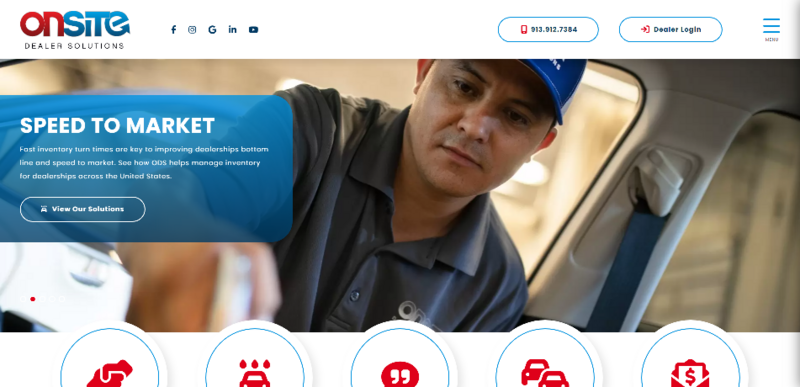
Critchfield Consulting originally worked with OnSite Dealer Solutions (ODS) on its redesigned website in 2022. The website developed a strong SEO foundation and substantial industry-specific content.
Several years later, the search environment had changed.
Instead of automatically recommending that ODS discard the website and start over, we evaluated what it already had.
The foundation was still strong.
The opportunity was to modernize it.
Our 2026 initiative ultimately revisited, revised, relaunched 116 pages across the ODS website, including service and software pages, company and location pages as well as new blog content. We focused on areas such as search intent, content depth, conversational search, internal linking, structured data and AI-driven discovery.
Readers can explore the original OnSite Dealer Solutions website project to see how that digital foundation was built, then read our ODS SEO modernization case study to see how the strategy continued evolving years after launch.
That's an important distinction.
The goal shouldn't be to replace your website every few years. The goal should be to build one worth continuing to invest in.
A New Website Starts a New Cycle
Our recent work with Finderson Law LLC represents the other end of that website lifecycle.
Critchfield Consulting worked with the Finderson Law team to develop a new digital foundation built around custom website design, expanded practice-area content, SEO, AI search considerations, internal linking, structured data and conversion strategy.
The new website is launched.
But that doesn't mean the work is finished.
New legal articles can support existing practice areas. Attorneys can continue demonstrating their experience through educational content. New questions can become FAQs. Client feedback and reviews can strengthen trust. New photography and video can keep the firm's visual presence current.
And as new content is published, we can return to established pages and strategically connect those resources throughout the website.
The Finderson Law project demonstrates what can be accomplished during a major website transformation.
What happens over the next several years will determine how much additional value that foundation creates.
Maintenance and Growth Are Different
It's also helpful to distinguish between maintaining a website and growing one.
Maintenance keeps the website functioning.
That can include software updates, security, backups, technical repairs, performance monitoring, broken-link checks and other routine responsibilities.
Growth asks a different set of questions.
What should we publish next? Which service page should we improve? What are customers searching for?
Where are competitors gaining visibility? Which pages need stronger internal links? Do we have new photography? What expertise hasn't been demonstrated online yet? How is search changing? Where are our leads coming from?
Both matter.
But a technically maintained website can still become strategically stagnant.
Keeping a website online isn't the same as keeping it competitive.
Your Website Should Become More Valuable
Think about your website differently.
Instead of treating it as a project with a beginning and an end, think of it as an asset you continue developing.
Every useful article adds knowledge. Every new case study adds evidence. Every authentic review adds trust. Every new photograph adds credibility. Every improved service page adds clarity. Every strategic internal link strengthens the relationships between your information. Every measurement provides another opportunity to make a better decision.
Over several years, those improvements compound.
The website you launch today shouldn't necessarily be the best version of your website.
The best version should be the one you're continuing to build.
What's Your Website's Next Step?
Maybe your website needs a complete redesign.
Maybe it doesn't. Here’s a recent blog on that exact subject titled, “When a Website Redesign Isn’t the Real Solution”.
You may need stronger content, better internal linking, refreshed service pages, improved conversion opportunities, updated photography, stronger SEO or a clearer strategy for traditional and AI-driven search.
The first step is understanding what you already have.
At Critchfield Consulting, our Digital Marketing Evaluations are designed to establish that baseline by identifying what's working, where opportunities exist and which improvements deserve priority.
Because the question isn't simply whether your website is finished.
It's whether your website is continuing to move your business forward.